18 posts tagged with "Aptos"

Articles about Aptos blockchain and its ecosystem

View all tags

Aptos DeFi Ecosystem Growth and Major Protocols in 2026

· 13 min read
Dora Noda
Software Engineer

While Ethereum and Solana dominate headlines, a quieter revolution is unfolding on Aptos. The blockchain born from Meta's Diem project has transformed from a promising Layer-1 into a DeFi powerhouse, crossing $1 billion in Total Value Locked and processing $60 billion in monthly stablecoin volume. What's driving this growth? A combination of Move language security, institutional partnerships with BlackRock and Franklin Templeton, and a suite of native protocols building the financial infrastructure for Web3's next phase.
Unlike the speculative frenzy that characterized earlier blockchain cycles, Aptos is attracting a different breed of capital: patient, institutional, and infrastructure-focused. As we move through 2026, the network's DeFi ecosystem offers a compelling case study in how modern blockchains can balance performance, security, and real-world utility.

The Move Advantage: Security by Design

At the heart of Aptos's DeFi success lies the Move programming language. Originally developed at Meta for the Diem project, Move brings a resource-oriented approach to smart contract development that fundamentally changes how developers handle digital assets.

Traditional smart contract languages like Solidity treat tokens as ledger entries that can be duplicated or lost through coding errors. Move treats assets as first-class resources that cannot be accidentally copied or destroyed. This isn't just theoretical elegance—it's practical security that eliminates entire classes of vulnerabilities that have cost DeFi billions in exploits.

The numbers speak for themselves. Aave V3, one of DeFi's most battle-tested protocols, was completely rewritten in Move for its Aptos deployment. The team chose to rebuild from scratch rather than port Solidity code, prioritizing Move's safety guarantees over development speed. When a protocol managing hundreds of millions in assets makes that choice, it signals confidence in the language's security model.

Move's formal verification capabilities provide an additional security layer. The Move Prover allows developers to mathematically verify contract behavior before deployment, catching bugs that traditional testing might miss. In an industry where a single smart contract vulnerability can drain hundreds of millions overnight, this level of assurance matters.

Looking ahead to 2026, Move is getting faster. MonoMove, a complete redesign of the Move VM, promises significant improvements in parallelism and single-thread performance while maintaining the language's security guarantees. This means DeFi protocols can handle more complex operations without sacrificing the safety that makes Move attractive in the first place.

The Big Three: Thala, Echelon, and Aries

Three protocols have emerged as the pillars of Aptos DeFi, each serving a distinct but complementary role in the ecosystem's infrastructure.

Thala: The DeFi Superapp

Thala Labs has positioned itself as Aptos's answer to the question: "What if one protocol could do everything?" The platform integrates a decentralized exchange (ThalaSwap), lending markets, a collateralized stablecoin (MOD), and liquid staking into a unified interface.

The strategy is working. As of mid-2025, Thala consistently captured more than 30% of spot trading volume on Aptos, processed over $10.4 billion in cumulative volume, and onboarded 652,000 users. The protocol's TVL hovers around $97 million, making it one of the chain's largest DeFi applications.

What sets Thala apart is its advanced pool architecture. The platform supports stableswap pools for efficient stablecoin trading, weighted pools for balanced asset exposure, and liquidity bootstrapping pools for new token launches. This flexibility allows Thala to serve both retail traders seeking low-slippage swaps and protocols launching new assets.

Thala's commitment to ecosystem growth extends beyond its own protocol. The Thala Foundry, a $1 million DeFi fund supported by the Aptos Foundation, aims to nurture at least five new Aptos-native DeFi protocols. This investment in the broader ecosystem demonstrates a long-term view that understands the network's success requires more than any single protocol's dominance.

Echelon: Institutional-Grade Lending

Echelon approaches DeFi lending with an institutional mindset. The protocol's $180 million TVL represents capital from users who prioritize capital efficiency and sophisticated risk management over the highest yields.

Built natively in Move, Echelon enables users to supply assets to earn yield, borrow against collateral, or deploy leverage strategies using what the team calls "capital-efficient architecture." This means borrowers can extract more value from collateral while lenders maintain appropriate safety margins—a delicate balance that many lending protocols struggle to achieve.

The protocol's design philosophy reflects lessons learned from DeFi's early years. Rather than maximizing TVL through unsustainable incentives, Echelon focuses on creating sustainable yield through actual borrowing demand. This approach may grow more slowly, but it builds a more resilient foundation for long-term success.

As of early 2026, Echelon is positioning for the next phase of its roadmap, which likely includes expanded collateral types and more sophisticated risk management tools. The protocol's recognition as one of Aptos's leading lending platforms suggests it's executing on this vision effectively.

Aries Markets: The Leverage Layer

Aries Markets brings a different proposition to Aptos DeFi: leveraged trading with up to 10x exposure. As the first and largest lending protocol on Aptos, Aries has processed over $600 million in total deposits and serves more than 700,000 unique wallets.

The protocol's edge comes from Aptos's high throughput and low latency, which enable real-time risk management and instant liquidations. In leveraged trading, speed matters—the difference between 1-second and 10-second liquidation times can mean the difference between a small loss and a cascading failure.

Aries's battle-tested status in the Move ecosystem gives it credibility that newer protocols lack. In DeFi, longevity without major exploits is its own form of marketing. Users are more willing to deposit significant capital into protocols that have survived market volatility and maintained security through various stress tests.

The platform's focus on margin trading fills a specific niche in Aptos DeFi. While Thala and Echelon serve more conservative users seeking yield or basic borrowing, Aries attracts traders willing to take directional bets with leverage. This diversification of user bases helps stabilize the overall ecosystem during market downturns.

Institutional Integration: Beyond Retail DeFi

What separates Aptos's 2026 trajectory from earlier blockchain cycles is the quality of its institutional partnerships. These aren't speculative bets or pilot programs—they represent real capital deployment at scale.

BlackRock's BUIDL fund, the asset manager's tokenized money market fund, has deployed over $500 million on Aptos. When the world's largest asset manager chooses your blockchain for a regulated financial product, it signals confidence in the underlying infrastructure's reliability and security.

Franklin Templeton's Benji platform joined BlackRock on Aptos, bringing additional institutional credibility. Apollo and Brevan Howard, major players in traditional finance, have also integrated with the network. These partnerships aren't about blockchain experimentation—they're about deploying tokenized assets where the infrastructure can support institutional requirements around security, compliance, and performance.

The stablecoin metrics reinforce this institutional thesis. Aptos processes approximately $60 billion in monthly stablecoin transaction volume, with $1.8 billion in total stablecoin supply as of mid-January 2026. Major issuers including USDT and USDC have deployed natively on the network, providing the liquidity foundation that institutional users require.

Real-world assets (RWAs) represent another institutional validation point. Aptos reports $1.2 billion in RWAs on the network, suggesting that tokenized securities, real estate, and other traditional assets are finding a home on the chain. This integration of TradFi assets with DeFi protocols creates new composability opportunities that weren't possible in earlier blockchain iterations.

Chainlink's Cross-Chain Interoperability Protocol (CCIP) launched on Aptos mainnet in 2026, marking the first CCIP integration on a Move-based blockchain. This connectivity across over 60 EVM and non-EVM networks solves a critical problem for institutional users: siloed liquidity. With CCIP, assets can flow between Aptos and other major chains without the security risks of traditional bridges.

Following the 2025 launch of U.S.-regulated APT futures on Bitnomial Exchange, the roadmap points toward further institutional integration in 2026, including potential perpetual futures and options products. These derivatives create additional liquidity and price discovery mechanisms that institutional users expect from mature markets.

The Stablecoin Hub Strategy

Aptos has positioned itself as a stablecoin-native blockchain, a strategic choice that creates a foundation for DeFi growth.

The network's stablecoin market cap reached $1.2 billion in the first half of 2025, an 85.9% increase driven by native deployments of USDT and USDC alongside newer entrants like USDe. This diverse stablecoin ecosystem prevents single-point-of-failure risks that plague chains dominated by one stablecoin issuer.

Processing $60 billion in monthly stablecoin volume isn't just a vanity metric—it demonstrates actual economic activity. Stablecoins serve as the base currency for DeFi protocols, the settlement layer for trading, and the yield-generating asset for lending markets. Without robust stablecoin infrastructure, sophisticated DeFi applications can't function effectively.

The stablecoin hub strategy also attracts institutional users who prioritize regulatory compliance. USDT and USDC come with established compliance frameworks and reserves audited by third parties. Institutions uncomfortable with volatile crypto assets can use Aptos's DeFi infrastructure while maintaining exposure only to stablecoins.

This positioning creates a virtuous cycle. More stablecoin liquidity attracts DeFi protocols seeking deep pools for swaps and lending. More protocols attract users who generate transaction volume. More volume attracts additional stablecoin issuers seeking to capture market share. Each component reinforces the others.

Performance Metrics: The 2025-2026 Growth Story

The quantitative data tells a story of steady, sustainable growth rather than speculative boom-and-bust cycles.

Total Value Locked across Aptos DeFi protocols has stabilized around $1 billion across approximately 30 active protocols. While this pales in comparison to Ethereum's DeFi ecosystem, it represents meaningful capital deployment for a relatively young blockchain. More importantly, the TVL distribution suggests a healthy ecosystem rather than concentration in one or two protocols.

DEX volume surged 310.3% quarter-over-quarter to $9 billion in Q2 2025. This growth was led by Hyperion, whose volume grew 29x to $5.4 billion following its February launch, and ThalaSwap V2, which quadrupled to $2.9 billion. The emergence of multiple successful DEXs indicates competition and innovation rather than monopolistic concentration.

User engagement metrics show consistent activity. June 2025 saw daily transactions averaging 4.2 million, peaking at 5.2 million. These aren't bot-driven numbers inflated by airdrop farming—they represent actual DeFi interactions across lending, trading, and staking protocols.

Echo Protocol's Bitcoin integration provides a window into Aptos's cross-chain ambitions. By July 2025, Echo secured a leading share of Aptos's bridged BTC supply, with 2,849 BTC staked and over $271 million in TVL. Bringing Bitcoin liquidity to Aptos DeFi expands the addressable market beyond native APT holders and stablecoin users.

Amnis Finance's explosive growth—up 1,882% year-over-year—demonstrates how specialized protocols can find product-market fit. The platform's monthly active wallets grew 181% in Q1 2025, making it the fastest-growing protocol on Aptos. This kind of parabolic adoption suggests users are discovering genuine utility rather than chasing yield farming incentives.

The 2026 Roadmap: Trading Primitives and Cross-Chain Accounts

Aptos's 2026 plans focus on enhancing DeFi infrastructure rather than chasing speculative narratives.

Trading primitives will expand the toolkit available to DeFi developers. These low-level building blocks enable more sophisticated financial products without each protocol rebuilding core functionality. Think of them as DeFi Legos that make it easier to construct complex applications.

Cross-chain accounts represent a more ambitious vision: a single account that can interact with multiple blockchains seamlessly. For users, this means managing assets across Ethereum, Solana, and Aptos without juggling separate wallets and gas tokens. For DeFi protocols, it means accessing liquidity from other ecosystems without complex bridge integrations.

Performance upgrades like Raptr and Block-STM V2 target sub-second finality, bringing Aptos closer to the speed of centralized exchanges while maintaining decentralization. In DeFi, latency matters—arbitrageurs, liquidators, and traders all benefit from faster transaction confirmation.

Ecosystem scaling efforts prioritize RWAs and institutional integration. This isn't about retail speculation; it's about bringing traditional finance onto blockchain rails. Tokenized treasuries, real estate, private credit—these assets represent trillions in potential value that could flow into DeFi protocols if the infrastructure proves reliable.

The Decibel mainnet launch, expected in 2026, will add another institutional-focused layer to the ecosystem. While specific details remain limited, the focus on institutional needs suggests a protocol designed for compliance-first use cases.

Challenges and Competition

No analysis of Aptos DeFi would be complete without acknowledging the competitive landscape and remaining challenges.

Sui, Aptos's Move language sibling, has demonstrated stronger momentum in some metrics. Recent data shows Sui leading in DeFi liquidity with $1 billion TVL compared to Aptos's $500 million. Both chains share Move's security advantages, so the competition comes down to execution, ecosystem development, and network effects.

The Move developer community remains smaller than EVM or Solana ecosystems. Learning a new programming language creates friction for developers considering which blockchain to build on. While Move's security benefits justify this learning curve, Aptos must continue investing in developer tools, documentation, and education to expand the talent pool.

Ethereum L2s present another competitive threat. Networks like Base and Arbitrum offer EVM compatibility, massive liquidity, and fast growing ecosystems. Developers can port existing Solidity contracts with minimal changes, making L2s an easier choice than learning Move and building on Aptos from scratch.

The institutional partnerships, while impressive, need to translate into measurable growth. Announcing collaboration with BlackRock generates excitement, but the real test is whether tokenized assets on Aptos see sustained growth in volume and user adoption. Pilot programs need to graduate into production systems.

User experience challenges persist across all of DeFi, and Aptos is no exception. Managing private keys, understanding gas fees, and navigating complex protocols remain barriers to mainstream adoption. Until blockchain interactions become as simple as using a banking app, DeFi will struggle to move beyond crypto-native users.

The Path Forward

Aptos DeFi's 2026 trajectory suggests a blockchain ecosystem that's maturing beyond hype cycles and speculation. The combination of Move language security, institutional partnerships, and robust protocol development creates a foundation for sustained growth.

The key differentiator isn't any single feature—it's the compounding effect of multiple strategic advantages. Move's security attracts protocols like Aave willing to invest in complete rewrites. These quality protocols attract institutional capital seeking safe deployment opportunities. Institutional capital attracts additional protocols and users. The flywheel accelerates.

For developers, Aptos offers a unique proposition: build on infrastructure designed for security and performance from day one, rather than trying to retrofit these qualities onto legacy systems. For institutions, it provides a compliant environment for deploying tokenized assets with confidence in underlying infrastructure. For users, it promises DeFi applications that don't force them to choose between security and functionality.

The competition from Sui, Ethereum L2s, and other chains ensures Aptos can't rest on current achievements. But the network's focus on fundamentals—security, performance, institutional infrastructure—positions it well for a 2026 landscape where speculative narratives give way to actual utility.

As the blockchain industry matures, success will increasingly depend on boring fundamentals: uptime, security, transaction speed, liquidity depth, and regulatory compliance. Aptos's DeFi ecosystem may not generate the most sensational headlines, but it's building the infrastructure for a financial system designed to last.

BlockEden.xyz provides enterprise-grade RPC infrastructure for Aptos and 10+ blockchain networks, enabling developers to build DeFi applications on foundations designed for reliability and performance. Explore our Aptos API services to accelerate your development.

Move VM Memory Safety vs EVM Reentrancy: Why the Aptos and Sui Resource Model Eliminates Entire Classes of Smart Contract Vulnerabilities

· 9 min read
Dora Noda
Software Engineer

The DAO hack of 2016 drained $60 million from Ethereum in a single afternoon. Nine years later, reentrancy attacks still cost DeFi protocols $35.7 million across 22 separate incidents in 2024 alone. The same class of vulnerability — an attacker calling back into a contract before its state is updated — continues to haunt the EVM ecosystem despite years of developer education, audit tooling, and battle-tested patterns.

Aptos and Sui, both built on the Move language, take a fundamentally different approach: they make entire categories of vulnerabilities impossible by design.

MoveVM Wars 2026: Sui vs Aptos vs Initia - Which Move Blockchain Wins Developer Mindshare?

· 10 min read
Dora Noda
Software Engineer

The Move programming language, born from Meta's abandoned Diem project, has evolved from a cautionary tale into one of blockchain's most compelling infrastructure narratives. In 2026, three distinct implementations—Sui, Aptos, and Initia—are competing for developer mindshare with radically different architectural philosophies. While Ethereum's Solidity ecosystem commands the network effects, Move-based chains are making a persuasive case: what if we could rebuild blockchain infrastructure from first principles, prioritizing safety, parallelization, and developer experience over backward compatibility?

Why Move Matters: The Security Thesis

Move was developed specifically because the Diem team surveyed existing solutions including the EVM and concluded they could build superior technology.

The language introduces three foundational innovations that fundamentally change how smart contracts execute:

First-class resources: Unlike Solidity's token model where assets are represented as mappings in storage, Move treats digital assets as first-class language primitives. Resources can never be copied or implicitly discarded—only moved between storage locations. This makes entire categories of vulnerabilities impossible at the language level.

Static type safety: Move's strong static type system catches errors at compile-time that would become runtime exploits in Solidity. The absence of dynamic dispatch prevents the re-entrancy attacks that have drained billions from Ethereum contracts.

Formal verification: Move's module system and generics enable mathematical proofs of contract correctness. The Move prover can verify that smart contracts behave exactly as specified before deployment.

These aren't incremental improvements—they represent a paradigm shift in how we think about smart contract security.

The Contenders: Three Paths to MoveVM Adoption

Sui: The Parallel Execution Innovator

Sui took Move and asked: what if we redesigned the entire blockchain architecture around it? The result is an object-centric model that fundamentally differs from traditional account-based systems.

Architectural Philosophy: Instead of accounts holding assets, Sui's data model treats everything as objects with unique IDs. Transactions interact with objects, not accounts. This seemingly simple shift enables something remarkable: parallel processing of transactions without complex dependency analysis.

Consensus Innovation: Sui employs a Directed Acyclic Graph (DAG) structure rather than sequential blocks. Simple transactions involving single-owner objects can bypass consensus entirely, achieving near-instant finality. For complex transactions requiring consensus, Sui's Mysticeti protocol delivers 0.5-second finality—the fastest among comparable systems.

The numbers validate the approach:

  • 954 monthly active developers (more than double Aptos' 465)
  • $2+ billion Total Value Locked (doubled in just three months)
  • 219% year-over-year developer growth

This momentum is driven by new tooling around Move, zk-data indexing, and cross-chain liquidity protocols.

2026 Strategic Pivot: Mysten Labs co-founder Adeniyi Abiodun announced Sui's transition from a Layer 1 blockchain to a unified developer platform called Sui Stack (S2).

The vision: provide a full-stack environment with integrated tools that simplifies building and reduces development friction. The Move VM 2.0 upgrade already reduced gas fees by 40%, and the 2026 roadmap includes a native Ethereum bridge and SuiNS, an on-chain name service to improve onboarding.

Aptos: The Enterprise Parallelization Play

Aptos took a different approach—optimizing Move for enterprise-grade performance while maintaining compatibility with existing developer workflows.

Technical Architecture: Where Sui redesigned the data model, Aptos employs a traditional account-centric model similar to Ethereum and Solana. The innovation comes in the execution layer: Block-STM (software transactional memory) enables optimistic parallel execution of transaction batches. The system assumes all transactions can process in parallel, then re-executes any conflicts detected.

Performance Metrics: In December 2025, Aptos achieved sub-50 millisecond block times on mainnet—faster than any other major Layer 1.

Sustained throughput exceeds 22,000 transactions per second, with theoretical capacity over 150,000 TPS. The 2026 roadmap includes deploying Raptr consensus and Block-STM V2 for even greater scalability.

Institutional Traction: Aptos pursued a deliberate enterprise strategy with impressive results:

  • Stablecoin market cap reached $1.8 billion by December 2025 (nearly tripling over the year)
  • BlackRock's Digital Liquidity Fund deployed $500 million in tokenized assets
  • Mid-2025 stablecoin market cap grew 86% to $1.2 billion

This institutional adoption validates Move for serious finance applications.

Market Reality Check: Despite technical achievements, APT faced sustained sell pressure in early 2026, hitting an all-time low of $1.14 on February 2 amid capital outflows.

The token's struggle highlights a crucial truth: technological superiority doesn't automatically translate to market success. Building great infrastructure and capturing market value are separate challenges.

Initia: The Cross-Chain Interoperability Wildcard

Initia represents the most ambitious vision: bringing Move to the Cosmos ecosystem while supporting EVM and WasmVM simultaneously.

Breakthrough Innovation: Initia implements the first native integration of the Move Smart Contracting Language with Cosmos' Inter-Blockchain Communication (IBC) protocol. This isn't just a bridge—it's Move as a first-class citizen in the Cosmos ecosystem.

OPinit Stack: Initia's rollup framework is VM-agnostic, enabling Layer 2s to choose EVM, WasmVM, or MoveVM based on application needs. The architecture provides fraud proofs and rollback capabilities while leveraging Celestia for data availability. Thousands of rollups can scale securely with seamless messaging and bridging between different VMs.

Strategic Positioning: Where Sui and Aptos compete directly as standalone Layer 1s, Initia positions itself as infrastructure for application-specific rollups. Developers get the safety of Move, the flexibility of multiple VMs, and the interoperability of Cosmos—a "0-to-1 rollup playbook" that Ethereum's generic rollup approach doesn't match.

The vision is compelling, but Initia remains the least mature of the three, with ecosystem metrics yet to prove real-world adoption.

The Developer Experience Question

Technical architecture matters, but developer adoption ultimately depends on one factor: how easy is it to build?

Learning Curve: Move requires rethinking mental models. Developers accustomed to Solidity's account-based paradigm must learn resource-oriented programming. Sui's object model adds another layer of conceptual overhead. Aptos' account-centric approach offers more familiarity, while Initia's multi-VM support lets teams stick with EVM initially.

Tooling Maturity: Sui's 2026 transition to a full-stack developer platform (S2) acknowledges that raw performance isn't enough—you need integrated tools, clear documentation, and smooth onboarding. Aptos benefits from formal verification tools via the Move prover. Initia's multi-VM strategy creates tooling complexity but maximizes ecosystem compatibility.

Network Effects: Ethereum's Solidity ecosystem includes 4,000+ developers, extensive libraries, auditing firms, and institutional knowledge. Move-based chains collectively employ perhaps 1,400+ active developers. Breaking EVM's gravitational pull requires more than technical superiority—it demands an order-of-magnitude improvement in developer experience.

The Interoperability Factor: Movement Labs' Bridge

Movement Labs' M2 project introduces a fascinating wildcard: a ZK rollup on Ethereum that supports both Move and EVM smart contracts. By enabling 10,000 transactions per second through parallelization, M2 could bring Move's safety to Ethereum's ecosystem without requiring developers to choose sides.

If successful, M2 makes the Sui vs. Aptos vs. Initia question less zero-sum. Developers could write in Move while deploying to Ethereum's liquidity and user base.

Ecosystem Metrics: Who's Winning?

Developer Activity:

  • Sui: 954 monthly active developers (2x Aptos)
  • Aptos: 465 monthly active developers
  • Initia: Insufficient public data

Total Value Locked:

  • Sui: $2+ billion (doubling in Q4 2025)
  • Aptos: $1.8 billion in stablecoin market cap alone
  • Initia: Pre-mainnet/early adoption phase

Growth Trajectories:

  • Sui: 219% YoY developer growth, 19.9% QoQ TVL growth
  • Aptos: 86% H1 stablecoin market cap growth, institutional adoption focus
  • Initia: Binance Labs backing, Cosmos ecosystem integration potential

The raw numbers favor Sui, but metrics tell incomplete stories. Aptos' institutional strategy targets regulated entities with compliance requirements—revenue that doesn't show up in TVL but matters for long-term sustainability. Initia's cross-chain approach could unlock value across multiple ecosystems rather than concentrating it in one.

The 2026 Narrative Battle

Three distinct value propositions are emerging:

Sui's Narrative: "We rebuilt blockchain from first principles for parallel execution. The fastest finality, most intuitive object model, and strongest developer growth prove the architecture works."

Aptos' Narrative: "Enterprise adoption requires battle-tested performance with familiar developer models. Our institutional traction—BlackRock, major stablecoin issuers—validates Move for serious finance."

Initia's Narrative: "Why choose one VM? We bring Move's safety to Cosmos' interoperability while supporting EVM and WasmVM. Application-specific rollups beat generic Layer 1s."

Each is compelling. Each addresses real limitations of existing infrastructure. The question isn't which is objectively superior—it's which narrative resonates with the developers building the next generation of blockchain applications.

What This Means for Developers

If you're evaluating MoveVM blockchains in 2026:

Choose Sui if: You're building consumer applications requiring instant finality and can embrace object-oriented programming. The developer tooling investment and ecosystem growth suggest momentum.

Choose Aptos if: You're targeting institutional users or building financial infrastructure requiring formal verification. The account model's familiarity and enterprise partnerships reduce adoption friction.

Choose Initia if: You need cross-chain interoperability or want to build application-specific rollups. The multi-VM flexibility future-proofs your architecture.

Consider Movement's M2 if: You want Move's safety without abandoning Ethereum's ecosystem. The ZK rollup approach lets you bridge both worlds.

The honest answer is that in 2026, the winner hasn't been decided. Move's core innovations—resource safety, formal verification, parallel execution—are proven. How those innovations get packaged and delivered to developers remains the open question.

The Bigger Picture: Can Move Overcome EVM's Network Effects?

Ethereum's ecosystem didn't emerge because Solidity is a superior language—it emerged because Ethereum was first to market with a general-purpose smart contract platform. Network effects compounded: developers learned Solidity, which created more tools, which attracted more developers, which legitimized Solidity as the standard.

Move chains face the cold-start problem every new ecosystem confronts. The language's technical advantages are real, but so is the opportunity cost of learning a new paradigm when Solidity jobs outnumber Move roles 10-to-1.

What could shift the equation?

Regulatory clarity favoring secure-by-default systems: If regulators begin requiring formal verification for financial smart contracts, Move's built-in verification becomes a competitive advantage, not a nice-to-have.

Performance demands exceeding sequential capacity: As applications require thousands of transactions per second, parallel execution stops being optional. Move chains offer this natively; EVM chains bolt it on.

Catastrophic EVM exploits: Every major Solidity hack—re-entrancy, integer overflow, access control failures—is ammunition for Move advocates arguing that language-level safety matters.

The most likely outcome isn't "Move replaces EVM" but "Move captures segments EVM can't serve well." Consumer applications needing instant finality. Institutional finance requiring formal verification. Cross-chain protocols needing interoperability.

The Road Ahead

The convergence of GPU scarcity, AI compute demand growth, and maturing DePIN infrastructure creates a rare market opportunity. Traditional cloud providers dominated the first generation of AI infrastructure by offering reliability and convenience. Decentralized GPU networks are competing on cost, flexibility, and resistance to centralized control.

2026 will clarify which architectural decisions matter most. Sui's object model vs. Aptos' account model. Standalone Layer 1s vs. Initia's rollup-centric approach. Move purity vs. Movement's EVM compatibility.

For the developers, protocols, and investors placing bets today, the choice isn't just technical—it's strategic. You're not just picking a blockchain; you're picking a thesis about how blockchain infrastructure should evolve.

The question isn't whether MoveVM blockchains will succeed. It's which flavor of success each will achieve, and whether that's enough to justify their valuations and narratives in a market that has become brutally efficient at punishing hype and rewarding execution.

BlockEden.xyz provides enterprise-grade API infrastructure for developers building across leading blockchain networks including Sui and Aptos. Explore our API marketplace to access reliable node services for Move-based chains and beyond.

Aptos vs. Sui: A Panoramic Analysis of Two Move-Based Giants

· 7 min read
Dora Noda
Software Engineer

Overview

Aptos and Sui stand as the next generation of Layer-1 blockchains, both originating from the Move language initially conceived by Meta's Libra/Diem project. While they share a common lineage, their team backgrounds, core objectives, ecosystem strategies, and evolutionary paths have diverged significantly.

Aptos emphasizes versatility and enterprise-grade performance, targeting both DeFi and institutional use cases. In contrast, Sui is laser-focused on optimizing its unique object model to power mass-market consumer applications, particularly in gaming, NFTs, and social media. Which chain will ultimately distinguish itself depends on its ability to evolve its technology to meet the demands of its chosen market niche, while establishing a clear advantage in user experience and developer friendliness.


1. Development Journey

Aptos

Born from Aptos Labs—a team formed by former Meta Libra/Diem employees—Aptos began closed testing in late 2021 and launched its mainnet on October 19, 2022. Early mainnet performance drew community skepticism with under 20 TPS, as noted by WIRED, but subsequent iterations on its consensus and execution layers have steadily pushed its throughput to tens of thousands of TPS.

By Q2 2025, Aptos had achieved a peak of 44.7 million transactions in a single week, with weekly active addresses surpassing 4 million. The network has grown to over 83 million cumulative accounts, with daily DeFi trading volume consistently exceeding $200 million (Source: Aptos Forum).

Sui

Initiated by Mysten Labs, whose founders were core members of Meta's Novi wallet team, Sui launched its incentivized testnet in August 2022 and went live with its mainnet on May 3, 2023. From the earliest testnets, the team prioritized refining its "object model," which treats assets as objects with specific ownership and access controls to enhance parallel transaction processing (Source: Ledger).

As of mid-July 2025, Sui's ecosystem Total Value Locked (TVL) reached $2.326 billion. The platform has seen rapid growth in monthly transaction volume and the number of active engineers, proving especially popular within the gaming and NFT sectors (Source: AInvest, Tangem).


2. Technical Architecture Comparison

FeatureAptosSui
LanguageInherits the original Move design, emphasizing the security of "resources" and strict access control. The language is relatively streamlined. (Source: aptos.dev)Extends standard Move with an "object-centric" model, creating a customized version of the language that supports horizontally scalable parallel transactions. (Source: docs.sui.io)
ConsensusAptosBFT: An optimized BFT consensus mechanism promising sub-second finality, with a primary focus on security and consistency. (Source: Messari)Narwhal + Tusk: Decouples consensus from transaction ordering, enabling high throughput and low latency by prioritizing parallel execution efficiency.
Execution ModelEmploys a pipelined execution model where transactions are processed in stages (data fetching, execution, write-back), supporting high-frequency transfers and complex logic. (Source: chorus.one)Utilizes parallel execution based on object ownership. Transactions involving distinct objects do not require global state locks, fundamentally boosting throughput.
ScalabilityFocuses on single-instance optimization while researching sharding. The community is actively developing the AptosCore v2.0 sharding proposal.Features a native parallel engine designed for horizontal scaling, having already achieved peak TPS in the tens of thousands on its testnet.
Developer ToolsA mature toolchain including official SDKs, a Devnet, the Aptos CLI, an Explorer, and the Hydra framework for scalability.A comprehensive suite including the Sui SDK, Sui Studio IDE, an Explorer, GraphQL APIs, and an object-oriented query model.

3. On-Chain Ecosystem and Use Cases

3.1 Ecosystem Scale and Growth

Aptos In Q1 2025, Aptos recorded nearly 15 million monthly active users and approached 1 million daily active wallets. Its DeFi trading volume surged by 1000% year-over-year, with the platform establishing itself as a hub for financial-grade stablecoins and derivatives (Source: Coinspeaker). Key strategic moves include integrating USDT via Upbit to drive penetration in Asian markets and attracting numerous leading DEXs, lending protocols, and derivatives platforms (Source: Aptos Forum).

Sui In June 2025, Sui's ecosystem TVL reached a new high of $2.326 billion, driven primarily by high-interaction social, gaming, and NFT projects (Source: AInvest). The ecosystem is defined by core projects like object marketplaces, Layer-2 bridges, social wallets, and game engine SDKs, which have attracted a large number of Web3 game developers and IP holders.

3.2 Dominant Use Cases

  • DeFi & Enterprise Integration (Aptos): With its mature BFT finality and a rich suite of financial tools, Aptos is better suited for stablecoins, lending, and derivatives—scenarios that demand high levels of consistency and security.
  • Gaming & NFTs (Sui): Sui's parallel execution advantage is clear here. Its low transaction latency and near-zero fees are ideal for high-concurrency, low-value interactions common in gaming, such as opening loot boxes or transferring in-game items.

4. Evolution & Strategy

Aptos

  • Performance Optimization: Continuing to advance sharding research, planning for multi-region cross-chain liquidity, and upgrading the AptosVM to improve state access efficiency.
  • Ecosystem Incentives: A multi-hundred-million-dollar ecosystem fund has been established to support DeFi infrastructure, cross-chain bridges, and compliant enterprise applications.
  • Cross-Chain Interoperability: Strengthening integrations with bridges like Wormhole and building out connections to Cosmos (via IBC) and Ethereum.

Sui

  • Object Model Iteration: Extending the Move syntax to support custom object types and complex permission management while optimizing the parallel scheduling algorithm.
  • Driving Consumer Adoption: Pursuing deep integrations with major game engines like Unreal and Unity to lower the barrier for Web3 game development, and launching social plugins and SDKs.
  • Community Governance: Promoting the SuiDAO to empower core project communities with governance capabilities, enabling rapid iteration on features and fee models.

5. Core Differences & Challenges

  • Security vs. Parallelism: Aptos's strict resource semantics and consistent consensus provide DeFi-grade security but can limit parallelism. Sui's highly parallel transaction model must continuously prove its resilience against large-scale security threats.
  • Ecosystem Depth vs. Breadth: Aptos has cultivated deep roots in the financial sector with strong institutional ties. Sui has rapidly accumulated a broad range of consumer-facing projects but has yet to land a decisive breakthrough in large-scale DeFi.
  • Theoretical Performance vs. Real-World Throughput: While Sui has higher theoretical TPS, its actual throughput is still constrained by ecosystem activity. Aptos has also experienced congestion during peak periods, indicating a need for more effective sharding or Layer-2 solutions.
  • Market Narrative & Positioning: Aptos markets itself on enterprise-grade security and stability, targeting traditional finance and regulated industries. Sui uses the allure of a "Web2-like experience" and "zero-friction onboarding" to attract a wider consumer audience.

6. The Path to Mass Adoption

Ultimately, this is not a zero-sum game.

In the medium to long term, if the consumer market (gaming, social, NFTs) continues its explosive growth, Sui's parallel execution and low entry barrier could position it for rapid adoption among tens of millions of mainstream users.

In the short to medium term, Aptos's mature BFT finality, low fees, and strategic partnerships give it a more compelling offering for institutional finance, compliance-focused DeFi, and cross-border payments.

The future is likely a symbiotic one where the two chains coexist, creating a stratified market: Aptos powering financial and enterprise infrastructure, while Sui dominates high-frequency consumer interactions. The chain that ultimately achieves mass adoption will be the one that relentlessly optimizes performance and user experience within its chosen domain.

[Pitch Deck] Stellar Soroban Indexer and GraphQL

· 2 min read
Dora Noda
Software Engineer

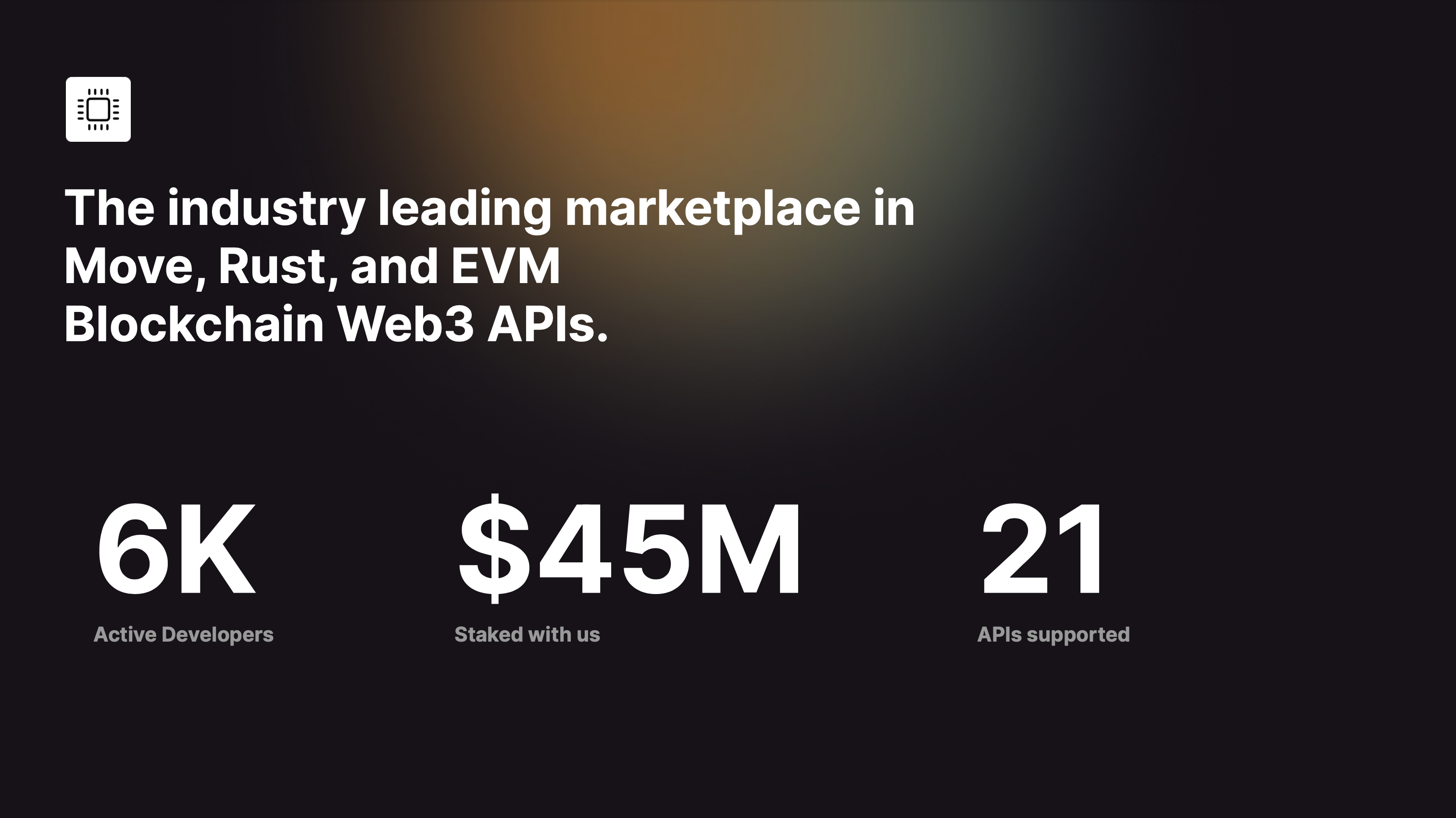
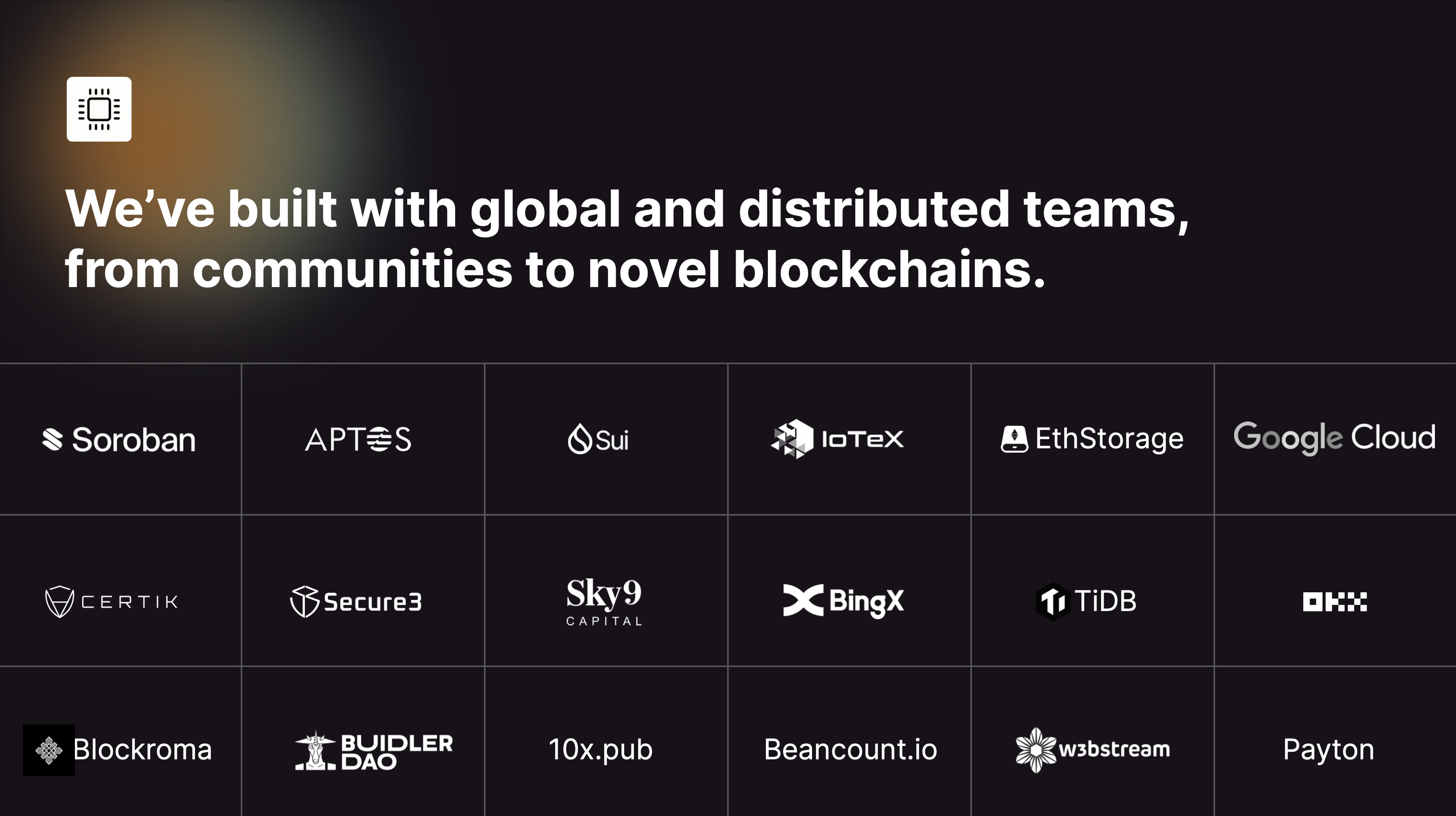
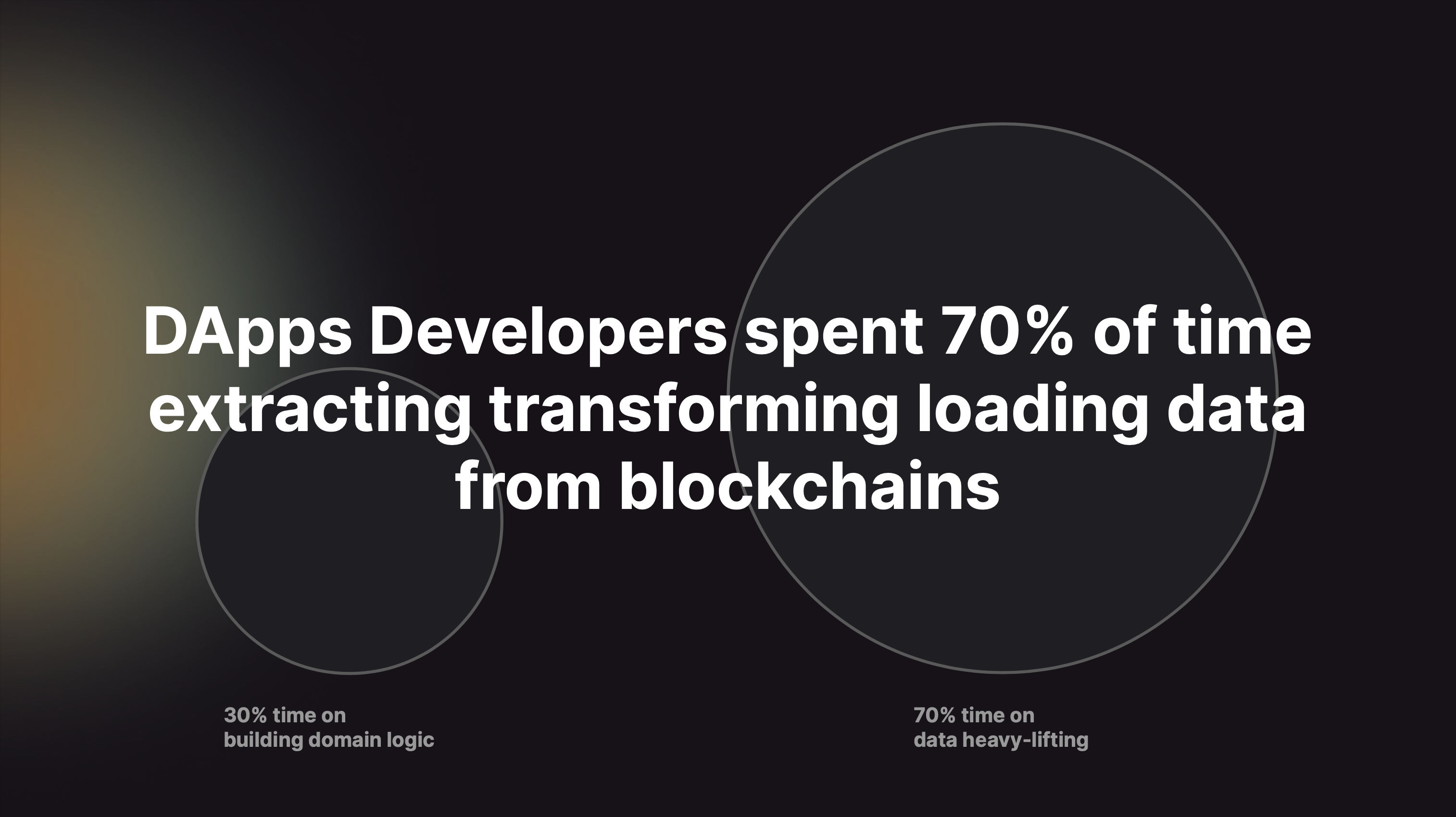
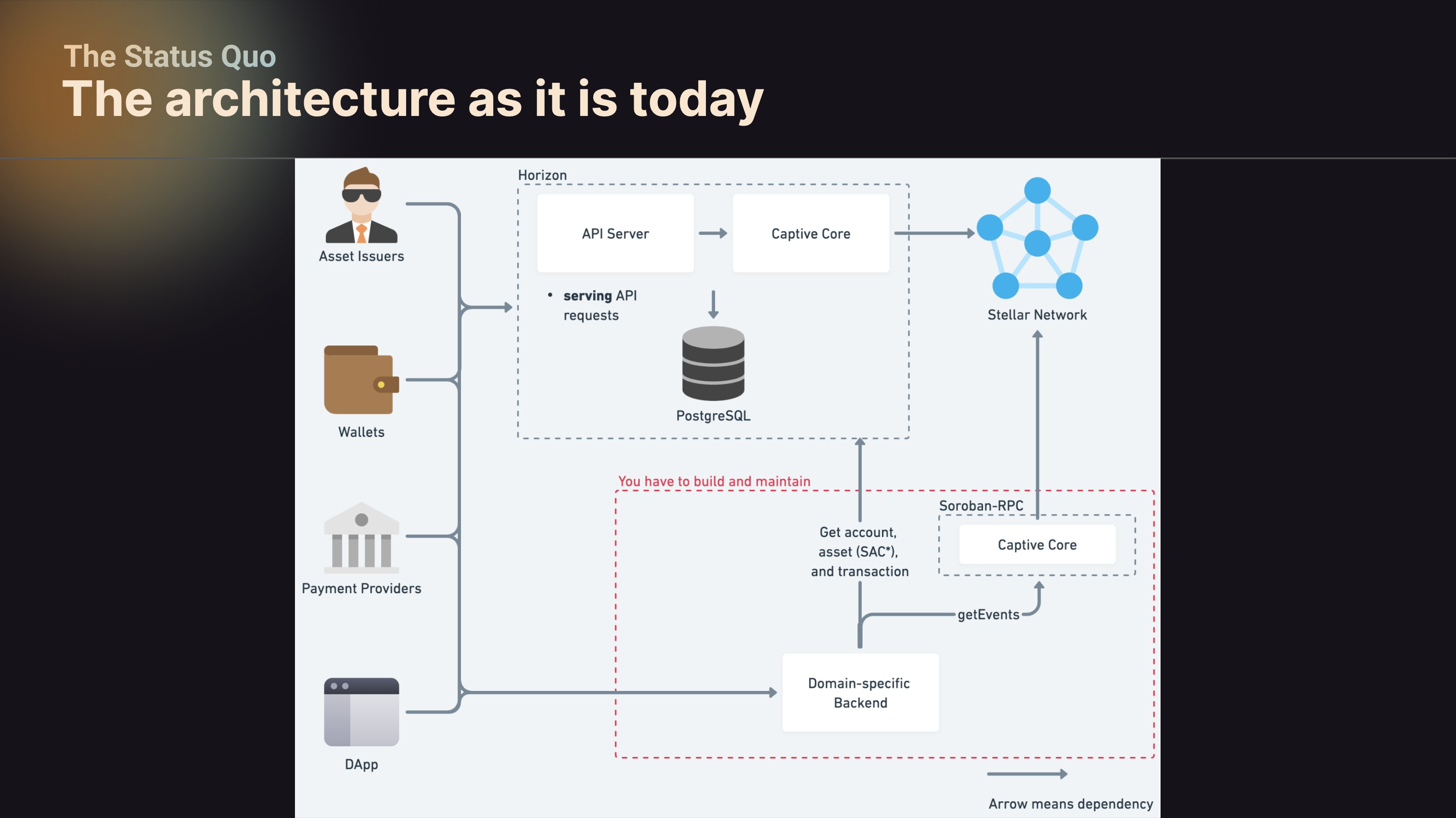
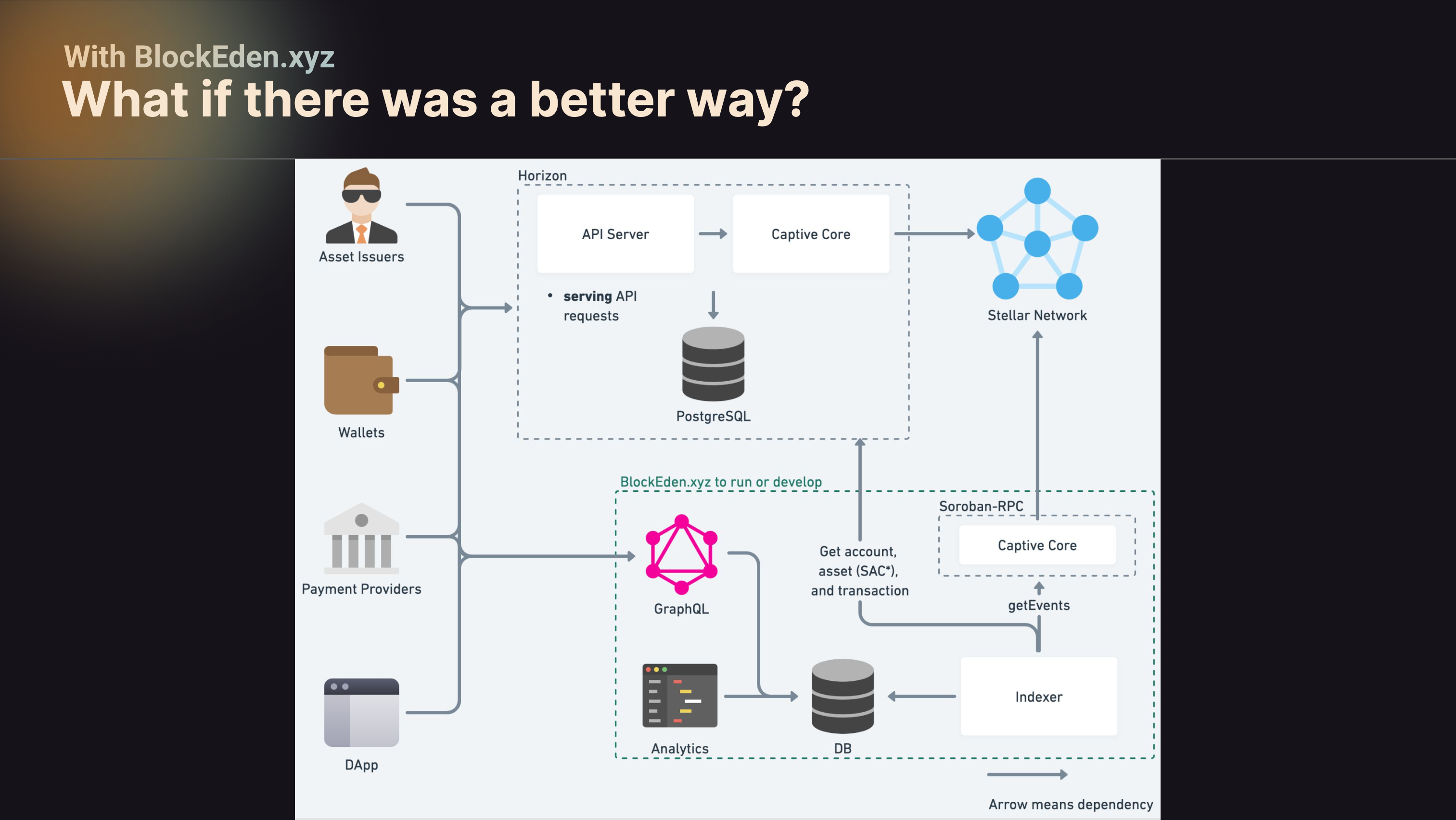
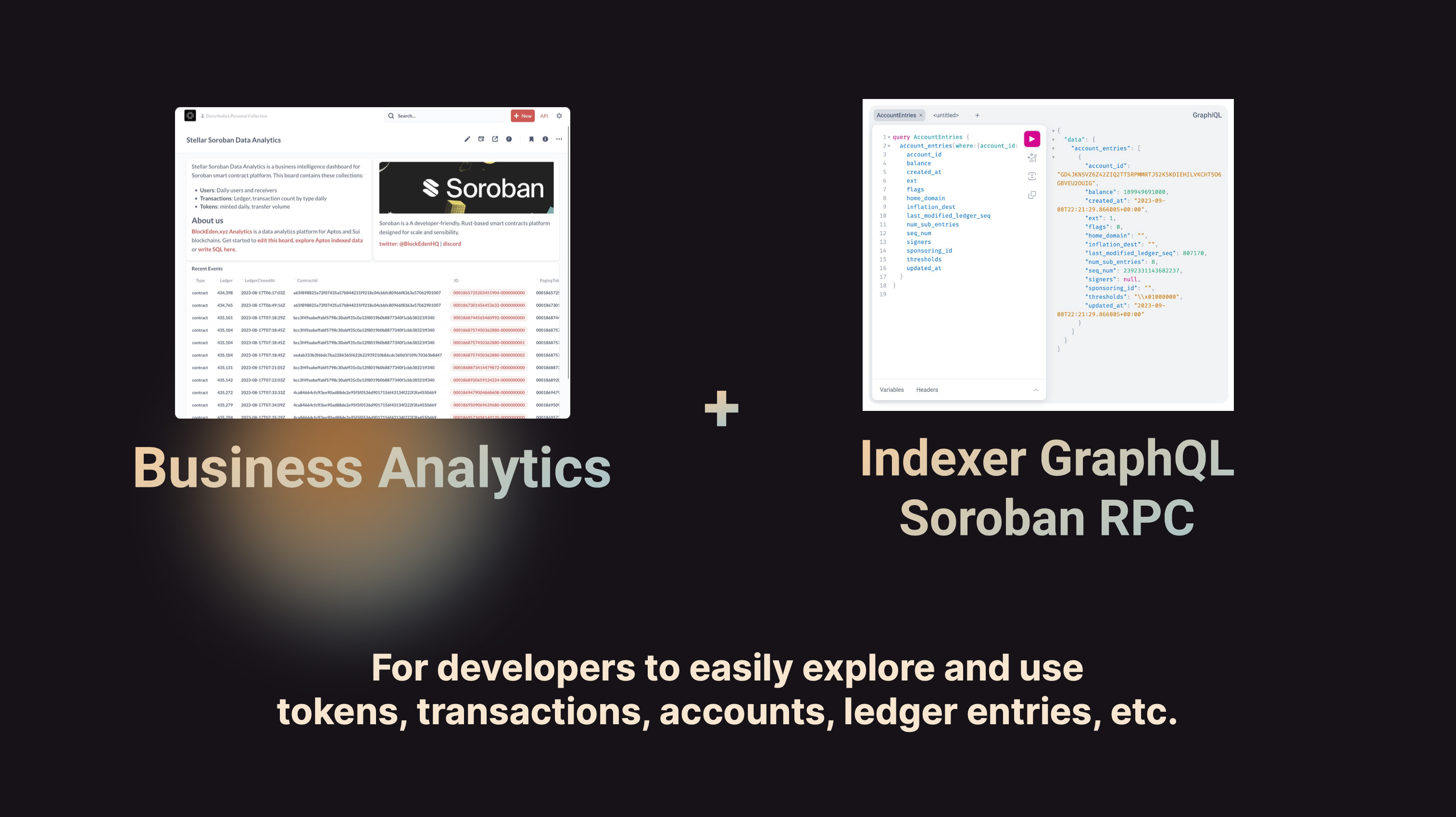
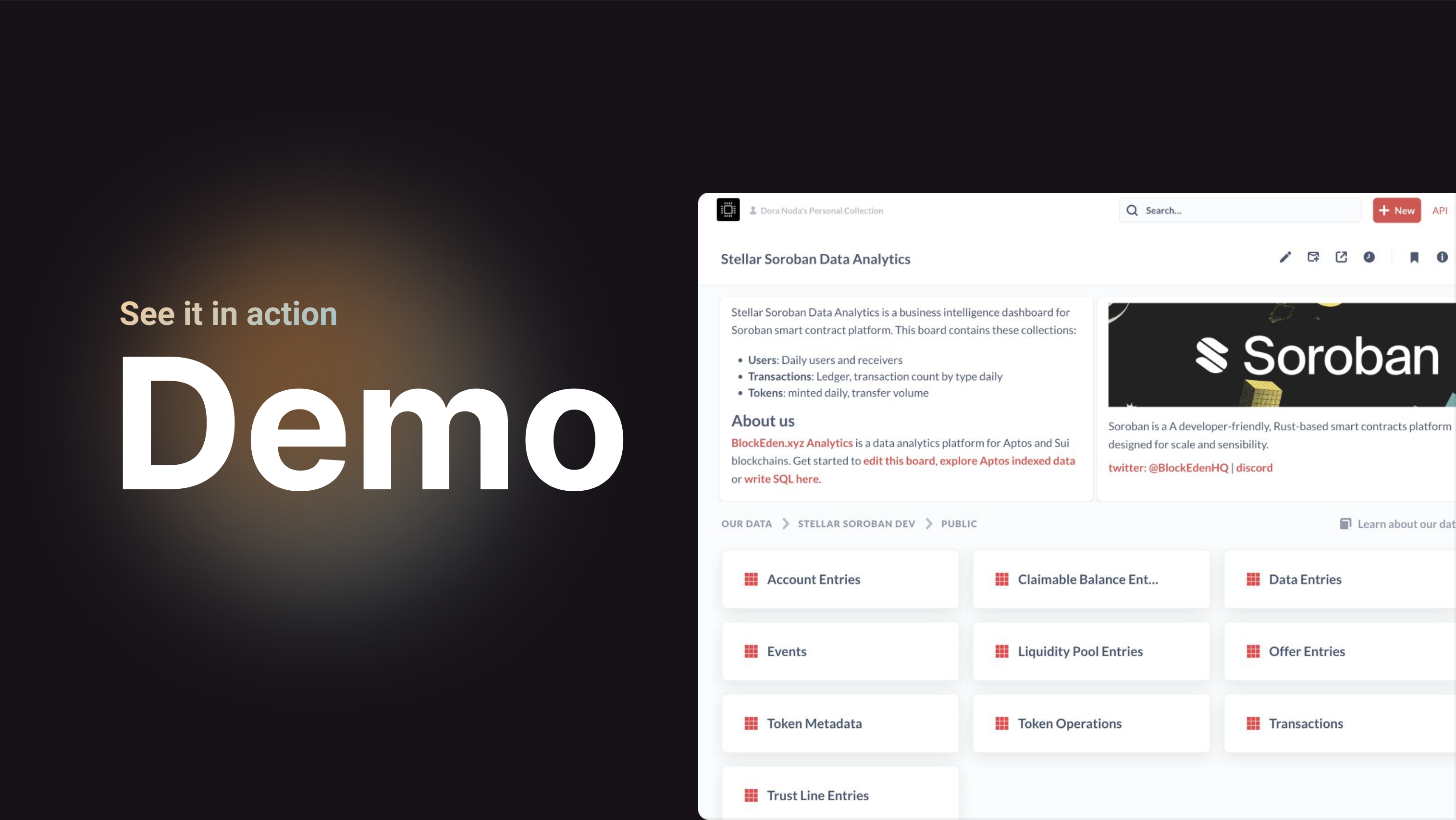
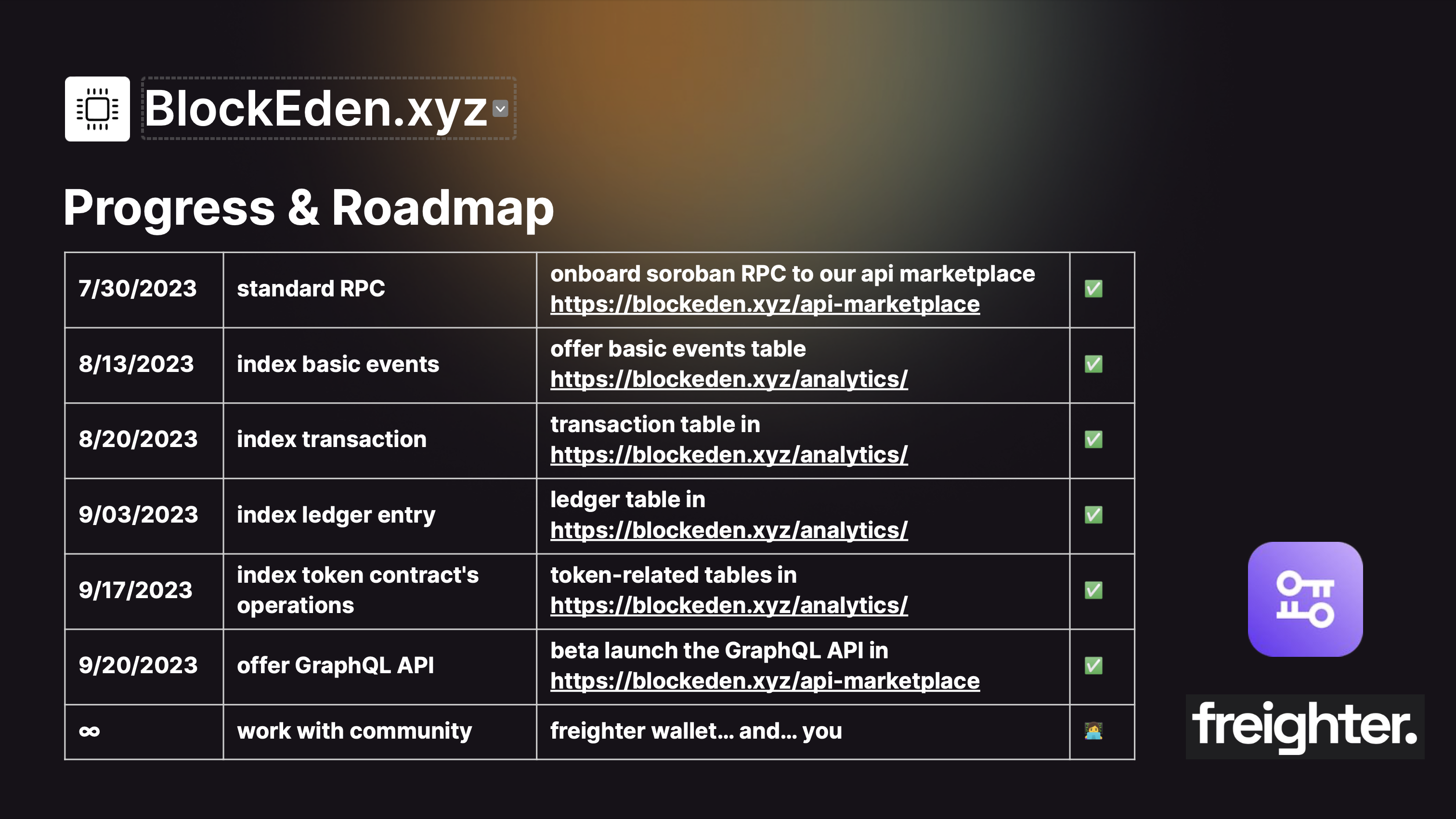
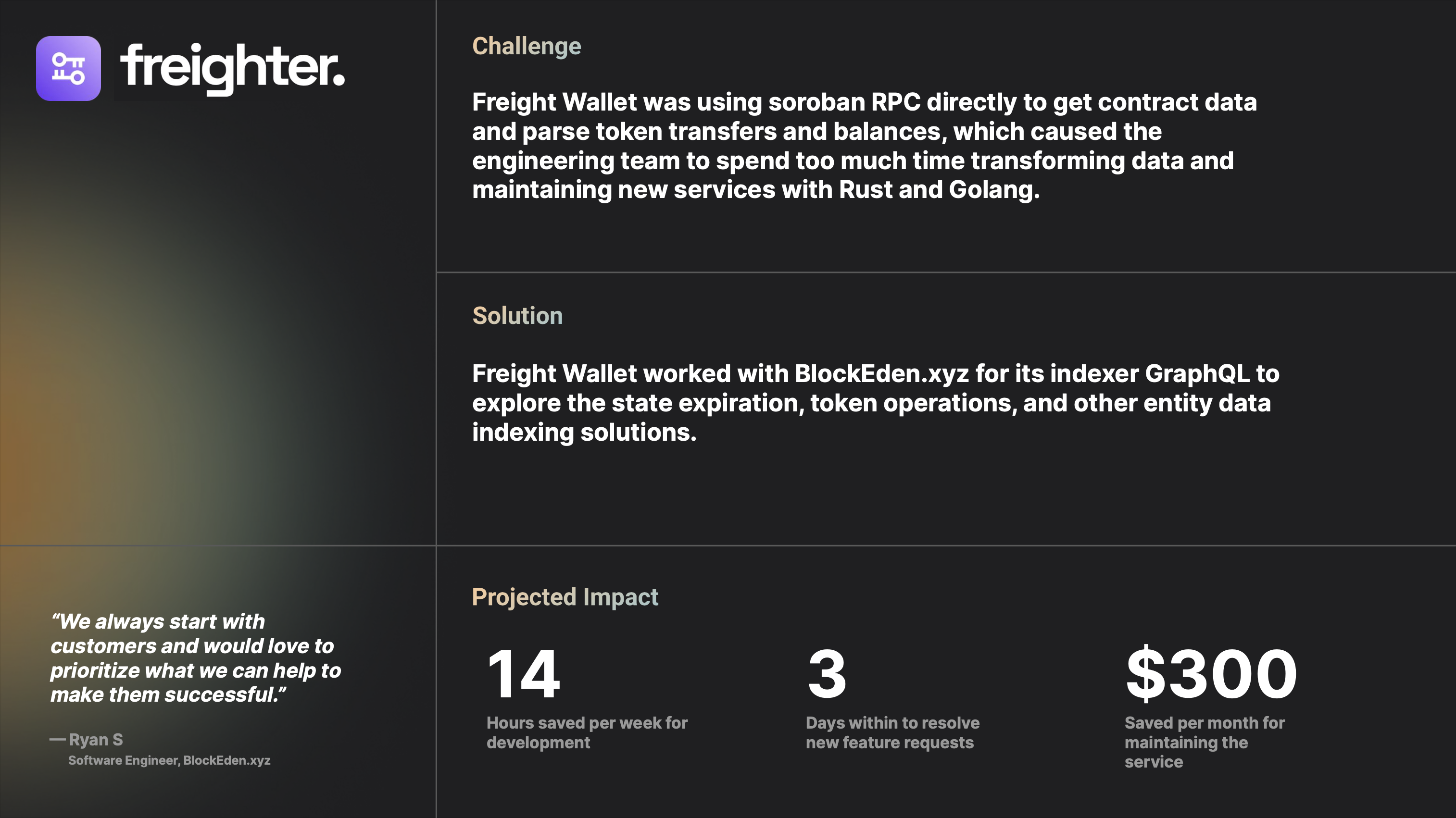
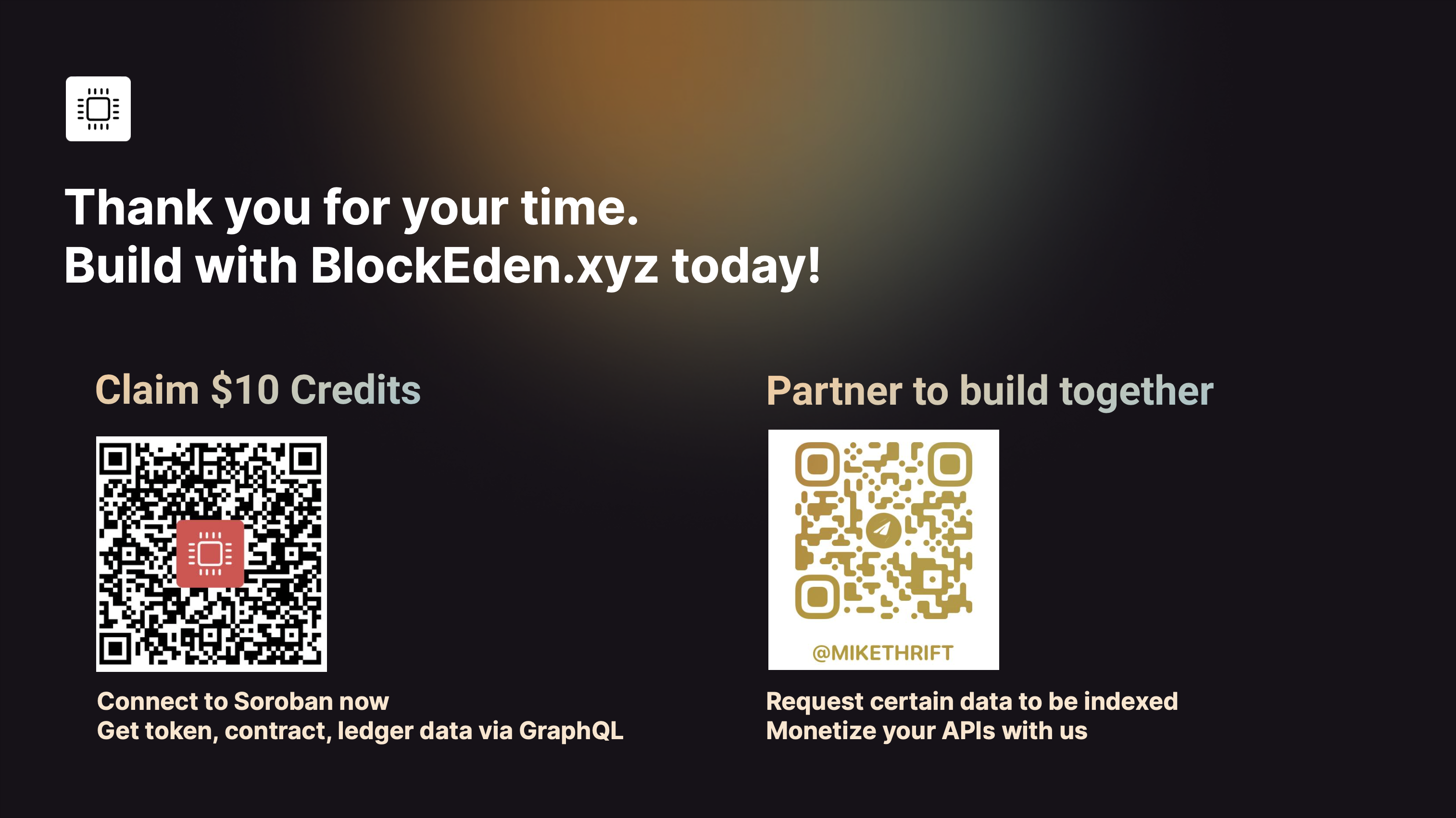
From September 26-28, 2023, in Madrid, Spain, BlockEden.xyz unveiled the Soroban Indexer and GraphQL at Stellar's annual Meridian conference. We were delighted to showcase our innovations at this esteemed event. Below is our pitch deck for your perusal.

soroban-indexer-blockeden-xyz-pitch-deck0.png soroban-indexer-blockeden-xyz-pitch-deck1.png soroban-indexer-blockeden-xyz-pitch-deck2.png soroban-indexer-blockeden-xyz-pitch-deck3.png soroban-indexer-blockeden-xyz-pitch-deck4.png soroban-indexer-blockeden-xyz-pitch-deck5.png soroban-indexer-blockeden-xyz-pitch-deck6.png soroban-indexer-blockeden-xyz-pitch-deck7.png soroban-indexer-blockeden-xyz-pitch-deck8.png soroban-indexer-blockeden-xyz-pitch-deck9.png soroban-indexer-blockeden-xyz-pitch-deck10.png soroban-indexer-blockeden-xyz-pitch-deck11.png soroban-indexer-blockeden-xyz-pitch-deck12.png


BlockEden.xyz launches Aptos REST Playground

· 5 min read
SamLis
Software Engineer

In modern software development, building robust APIs is crucial. APIs (Application Programming Interfaces) serve as the key for communication and data exchange between different software systems, and an API that is easy to use and test can greatly accelerate the development process. We are excited to announce that we have introduced a brand new feature for Aptos - Aptos REST Playground. This is a high-availability API toolkit based on Aptos development, designed to assist you in building Aptos applications faster and better.

What is Aptos REST Playground?

Aptos REST Playground is an interactive Web3 application designed to assist developers in exploring, testing, and understanding the Aptos API with ease. It provides an intuitive Swagger-based interactive interface that allows you to construct and send REST requests, view responses, and test to analyze data.

This tool enables Aptos developers to gain a better understanding of Aptos functionality and build exceptional Aptos applications more quickly and efficiently.

Why Choose Aptos REST Playground?

Aptos REST Playground is a high-performance REST API customized specifically for Aptos developers by Blockeden.xyz. It aims to provide the following advantages to Aptos developers:

  1. Interactive API Testing

Aptos REST Playground allows you to conduct interactive API testing without leaving your browser. It is an interactive application built on Swagger. You can construct and customize requests, view real-time responses, and make adjustments as needed. This greatly simplifies the process of API testing and debugging.

  1. Real-time Data Analysis

You can directly view the data in the API responses within Aptos REST Playground, without the need to write additional code or use third-party tools. This makes it easier for you to comprehend the information returned by the API, facilitating the development of better applications.

  1. User-Friendly

The user interface of Aptos REST Playground is highly intuitive, requiring no complex setup or configuration. Whether you are an experienced developer or a beginner, you can easily get started and use it effectively.

How to Get Started with Aptos REST Playground?

Enter our API marketplace and select the Aptos card:

img

Inside the Aptos REST Playground interface, locate the Test REST chain API where you can see that we have integrated all the interfaces required for Aptos development:

img

Here, you don't need any additional configuration; our playground is ready to use out of the box. Taking Get Account as an example, we will show you how to use Aptos REST Playground:

  1. Expand the /account/{address} table; we have preconfigured some parameters for you. Of course, you can also set your own parameters.
  2. Click the Try it out button, and you can access the interface using either our default parameters or any information you set yourself. You will immediately receive the data you need. Pay special attention to the data with an HTTP Code of 200; it will be your primary focus. With this data, you can analyze any Aptos data request.

img

Sometimes, to test the speed and stability of the product, you may want to build a set of testing code on the frontend yourself. This is allowed and supported by us.

Before doing so, you need to first locate your BLOCKEDEN_API_KEY, which can be found at https://blockeden.xyz/dash:

img

If you haven't created your own BLOCKEDEN_API_KEY yet, you can still use the public API key we provide: 8UuXzatAZYDBJC6YZTKD.

Now, let's create our own simple testing code based on React and the Aptos REST API:

import React, { useState, useEffect } from "react";

function App() {
const [data, setData] = useState(null);

useEffect(() => {
const address =
"0x0000000000000000000000000000000000000000000000000000000000dead";
const apiEndpoint = `https://api.blockeden.xyz/aptos/8UuXzatAZYDBJC6YZTKD/v1/accounts/${address}`;

const fetchData = async () => {
try {
const response = await fetch(apiEndpoint, {
method: "get",
headers: {
"Content-Type": "application/json",
},
});

if (!response.ok) {
throw new Error("Network response was not ok");
}

const result = await response.json();
setData(result);
} catch (error) {
console.error("API Request Error:", error);
}
};

fetchData();
}, []);

return (
<div className="App">
<h1>Aptos Indexer GraphQL Example</h1>
{data ? <pre>{JSON.stringify(data, null, 2)}</pre> : <p>Loading...</p>}
</div>
);
}

export default App;

We also support cURL testing:

curl -L -X GET 'https://api.blockeden.xyz/aptos/8UuXzatAZYDBJC6YZTKD/v1/accounts/0x0000000000000000000000000000000000000000000000000000000000dead' \\
-H 'Accept: application/json'

Aptos REST Playground is a powerful development tool for Aptos, designed to simplify the process of Aptos development and testing. We hope it provides developers with a better working experience and contributes to the creation of exceptional applications. If you have any feedback or suggestions, please don't hesitate to contact us. Thank you for your attention!


BlockEden.xyz launches new Aptos Indexer GraphQL Playground

· 5 min read
SamLis
Software Engineer

We are excited to announce some great news to the community: After a period of development, we have launched a GraphQL playground based on the Aptos API. This is designed to assist you in building Aptos applications faster and better.

It is widely known that in today's world of software development, building efficient, flexible, and scalable APIs is of paramount importance. APIs (Application Programming Interfaces) serve as the bridge for communication and data exchange between different software systems, making well-designed APIs crucial for the success of applications. GraphQL has already become the preferred tool for many developers in building flexible and powerful APIs.

Today, we are thrilled to announce Aptos Indexer GraphQL, a high-performance GraphQL framework designed specifically for Aptos developers. It is aimed at simplifying the development and management of Aptos APIs while delivering outstanding performance and scalability.

What is GraphQL?

First, let's take a look at what GraphQL is all about. GraphQL is a query language and runtime environment for APIs that allows clients to precisely specify the data they need, instead of receiving data in fixed formats like traditional REST APIs. This flexibility makes GraphQL particularly well-suited for building client-driven applications, such as single-page applications (SPAs) and mobile apps.

The core idea of GraphQL is "only get the data you need." Clients can retrieve multiple resources through a single request and specify the fields they need for each resource. This reduces the issues of over-fetching or under-fetching data, thereby improving network efficiency.

Why choose Aptos Indexer GraphQL?

Aptos Indexer GraphQL is a high-performance GraphQL API tailor-made for Aptos developers. It aims to provide the following advantages to Aptos developers:

  1. Simplified development process

    Aptos Indexer GraphQL simplifies the API development process by offering a clear and intuitive API definition language and tools. Developers can easily define data types, queries, mutations, and resolvers, making API construction highly intuitive.

  2. Outstanding performance

    Aptos Indexer GraphQL is designed as a high-performance framework. It utilizes modern data-loading techniques to ensure that only necessary database queries are executed, thereby reducing response times and enhancing performance.

  3. Scalability

    Aptos Indexer GraphQL can meet your needs regardless of the scale of your application. It supports a modular architecture, allowing for easy addition of new features and data types.

  4. Powerful utilities

    Aptos Indexer GraphQL provides a set of GraphQL-based testing tools, including GraphiQL, which allows you to interactively validate the required data in real-time, making it easier for you to develop, test, and maintain the API.

How to get started with Aptos Indexer GraphQL?

First, select the Aptos Indexer service in our API marketplace:

blockeden.xyz api marketplace

blockeden.xyz api marketplace

Then, copy your BLOCKEDEN_API_KEY at https://blockeden.xyz/dash:

BLOCKEDEN_API_KEY

BLOCKEDEN_API_KEY

After receiving a success message, you can start using the Aptos Indexer GraphQL service.

If you haven't created a BLOCKEDEN_API_KEY yet, you can still use the public API key: 8UuXzatAZYDBJC6YZTKD.

Here is a simple example of using React to connect to the Aptos Indexer GraphQL service:

import React, { useState, useEffect } from 'react';

function App() {
const [data, setData] = useState(null);

useEffect(() => {
const apiEndpoint = 'https://api.blockeden.xyz/aptos/indexer/8UuXzatAZYDBJC6YZTKD/v1/graphql';

const fetchData = async () => {
try {
const response = await fetch(apiEndpoint, {
method: 'POST',
headers: {
'Content-Type': 'application/json'
},
body: JSON.stringify({
query: `
query {
block_metadata_transactions(limit: 2) {
block_height
}
}
`,
}),
});

if (!response.ok) {
throw new Error('Network response was not ok');
}

const result = await response.json();
setData(result.data);

} catch (error) {
console.error('GraphQL Request Error:', error);
}
};

fetchData();
}, []);

return (
<div className="App">
<h1>Aptos Indexer GraphQL Example</h1>
{data ? (
<pre>{JSON.stringify(data, null, 2)}</pre>
) : (
<p>Loading...</p>
)}
</div>
);
}

export default App;

You can also directly access our built-in GraphiQL service, located at the bottom of the https://blockeden.xyz/api-marketplace/aptos-indexer page.

Aptos Indexer GraphQL service for blockeden.xyz

Aptos Indexer GraphQL service for blockeden.xyz

Alternatively, you can directly access Aptos Indexer GraphQL using curl:

curl https://api.blockeden.xyz/aptos/indexer/8UuXzatAZYDBJC6YZTKD/v1/graphql \
-H 'Content-Type: application/json' \
-X POST \
-d '{"query":"query {block_metadata_transactions(limit: 2) {block_height}}"}'

Conclusion

Aptos Indexer GraphQL is a powerful development service within the Aptos ecosystem, designed to streamline the development and management of Aptos APIs while delivering exceptional performance and scalability. We hope that developers can enhance their Aptos applications and enjoy a faster and more efficient development process through the use of Aptos Indexer GraphQL.

Thank you for your interest in our latest product release. If you have any questions or feedback, please feel free to contact our support team. We look forward to hearing from you and continually improving and enhancing Aptos Indexer GraphQL.


BlockEden.xyz and Aptools Partner to Strengthen the Aptos Developer Ecosystem

· 3 min read
Dora Noda
Software Engineer

Aptos has been gaining traction over the past five months after the mainnet launch, and with its growth comes the need for more sophisticated tools and resources for developers. BlockEden.xyz and Aptools have recognized this need and have partnered to create a more robust blockchain developer ecosystem. In this blog post, we will introduce both companies and explain why our partnership matters.

BlockEden.xyz and Aptools Partner to Strengthen the Aptos Developer Ecosystem

BlockEden.xyz · Aptools Partnership
(image served from dStore)

BlockEden.xyz is a San Francisco-based software company that specializes in connecting web3 developers to blockchain nodes and networks. Its goal is to build an all-inclusive platform for web3 developers to make it easier for them to build decentralized applications. BlockEden.xyz has a team of experienced developers and blockchain experts who are committed to providing the best possible experience for its users.

Aptools, on the other hand, is an open-source project that provides developers with real-time data about the Aptos blockchain network. It is a valuable resource for developers who want to build decentralized applications on top of the Aptos blockchain. Aptools keeps track of the latest transactions for free and offers a user-friendly interface that developers can easily navigate.

The partnership between BlockEden.xyz and Aptools is significant because it brings together two companies that have complementary strengths. BlockEden.xyz's expertise in blockchain connectivity will enable developers to access real-time data from the Aptos blockchain network seamlessly. This integration will allow developers to build more efficient and effective decentralized applications.

Moreover, the partnership will help both companies expand their reach and establish a stronger presence in the Aptos community. Aptools has a large and active community of developers who are already using its platform. By collaborating with Aptools, BlockEden.xyz can tap into this community and introduce its services to a wider audience. On the other hand, Aptools can benefit from BlockEden.xyz's expertise in blockchain technology, which can help them improve their platform and offer more advanced features to their users.

In conclusion, the partnership between BlockEden.xyz and Aptools is a strategic move that will benefit both companies and the Aptos community. By leveraging each other's strengths, they can create a more robust ecosystem for web3 developers. The partnership will enable developers to access real-time data from the Aptos blockchain network seamlessly, which will help them build more efficient and effective decentralized applications. We can expect to see more collaborations like this in the future as companies recognize the value of partnerships in the Aptos blockchain space.

How to Pay BlockEden.xyz with APT, USDC, USDT on Aptos

· 3 min read
Dora Noda
Software Engineer

Are you looking for an easy way to pay for your subscription to BlockEden's API service? Look no further! We are happy to announce that we accept APT as a payment method.

APT is the token of the Aptos blockchain, and it's a great way to pay for our products. Soon, we will also be accepting SUI when Sui mainnet launches. Read on to learn how you can pay for our services with APT!

How to Pay BlockEden.xyz with APT, USDC, USDT on Aptos

Step 1: Get Your APT Wallet Ready

Before you can pay for your subscription with APT, you will need an APT wallet. You can get any wallet that supports Aptos, like Pontem. Once you have a wallet, make sure it has enough funds to cover the subscription cost. You can transfer money from other wallets or buy more tokens directly from exchanges like Coinbase, Hippo.space or LiquidSwap.

Step 2: Go to Our Website and Select the Subscription Plan

Once your wallet is ready, go to BlockEden. xyz's website https://blockeden.xyz/pricing/ and select the best plan for your needs. Then, click Pay with crypto and select APT over the Aptos network as your payment method. This will generate an address with a QR code containing the recipient's address. Please send the exact amount of coins to the listed address. Once this is done, you will see Payment succeeded and click the button to get back to the dashboard.

Step 3: Confirm Your Payment

When you have completed the transaction, recheck your wallet balance and ensure that the correct amount has been deducted. If everything looks good, then congratulations! You have successfully paid for your subscription using APT tokens! Now all that's left is to start using our services and enjoy all of their benefits!

Paying for BlockEden. xyz's services with APT tokens is both fast and secure. With just three steps—getting a wallet ready, selecting a plan on our website, and confirming payment—you can subscribe to our services quickly and easily without having to worry about security risks or waiting times associated with other payment methods like credit cards or bank transfers. So what are you waiting for? Start subscribing today with BlockEden.xyz and pay securely with APT tokens!

What is BlockEden.xyz?

BlockEden.xyz provides a set of APIs that makes it easy for developers to connect to the Aptos and Sui networks. As a result, our platform enables developers to quickly and securely build decentralized applications (DApps). In addition, we offer tools that help developers to query those blockchains with SQL and GraphQL.

We believe that our platform will help to accelerate the development of the Aptos and Sui ecosystems. We aim to make it easy for developers to build DApps on Aptos and Sui, so that more people can use these blockchains to fulfill their decentralized needs.